
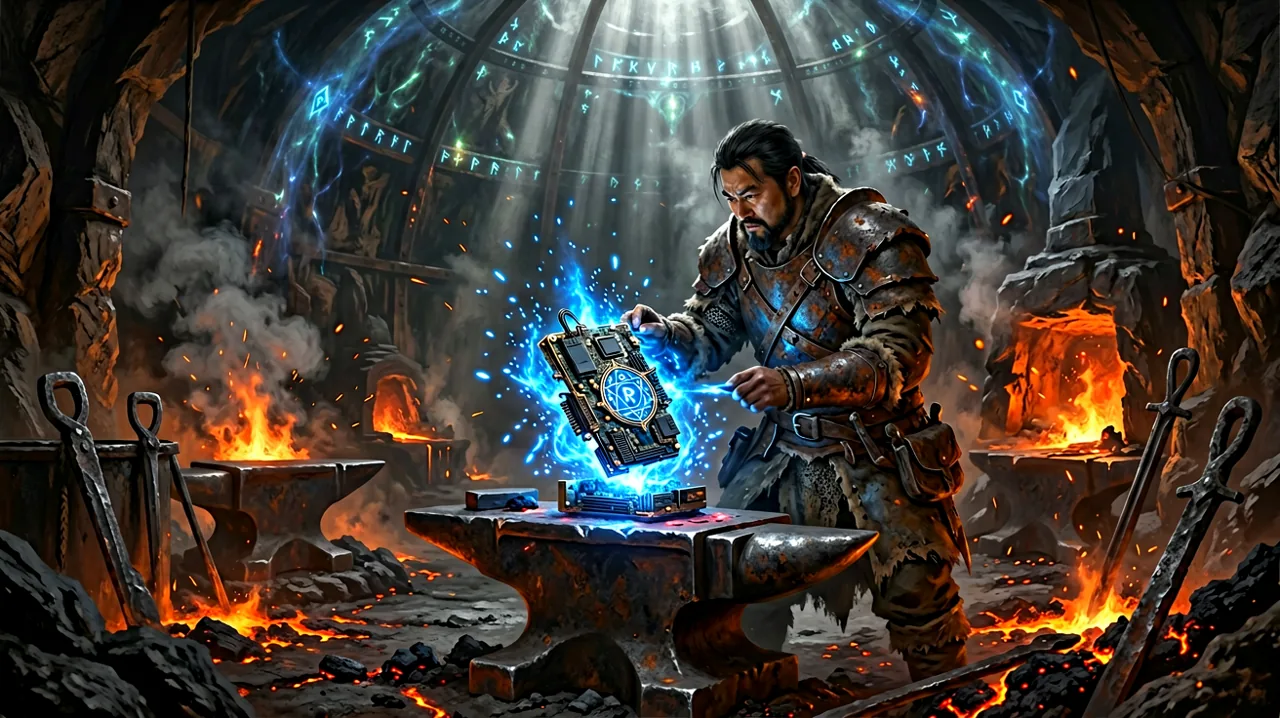
For PC players, the real final boss of the Gothic 1 Remake isn’t the Sleeper or the Ore Barons—it is Unreal Engine 5. Nearly three months after Alkimia Interactive and THQ Nordic dropped us back into the Valley of Mines, the game remains a spectacular, gorgeous, and uncompromisingly heavy piece of software. While PlayStation 5 and Xbox Series X players have enjoyed relatively stable framerates following Patch 1.0.5, the PC community is still fighting a daily battle against hardware bottlenecks, stuttering, and extreme system demands.
The magical Barrier keeps the prisoners inside the colony, but the towering system requirements are keeping a massive chunk of the player base out. Over the past few days, community forums have been flooded with discussions about how to bypass these extreme technical hurdles, ranging from injecting experimental upscaling mods to entirely abandoning local hardware in favor of cloud gaming.
”I’m Not Buying $900 RAM Sticks”
The sentiment across the PC gaming landscape is a mix of awe at the game’s visuals and sheer frustration at the cost of rendering them. A recent discussion on the r/gamingsuggestions subreddit perfectly encapsulated the mood. When asked for recommendations for large-scale, non-linear fantasy games, one user explicitly mentioned the Gothic 1 Remake but immediately added a heavy caveat: they refused to buy “$900 RAM sticks” just to get the game running smoothly, despite already owning a high-end RTX 4090.
While the “$900 RAM” comment is an obvious exaggeration born out of frustration, it highlights a very real issue. The colony is rendered with an absurd level of detail. Every single wooden plank in the Old Camp, every glowing chunk of magical ore, and every blade of grass in the Swampland utilizes Unreal Engine 5’s Nanite geometry. When paired with Lumen global illumination calculating complex light bounces off the shimmering blue magical Barrier in the sky, the result is a game that routinely brings mid-range rigs to their knees.
Why Framerate is a Matter of Life and Death
In many modern RPGs, a frame drop is just a momentary visual annoyance. In the Gothic 1 Remake, it is a death sentence. Alkimia Interactive stayed true to the hardcore, punishing nature of the 2001 original, meaning the combat system is entirely built around precise timing, deliberate animations, and reading enemy telegraphs.
If your game stutters right as a Minecrawler lunges at you in the dark tunnels of the Old Mine, you will fail your parry. If you are running a high-risk, low-armor dexterity build and miss your dodge window because your CPU bottlenecked while rendering an NPC routine, you are going to die. Every time you invest your hard-earned Learning Points into one-handed sword mastery, you expect your physical inputs to translate instantly to the screen.
The same applies to the delicate art of thievery. The overhauled lockpicking mechanics require steady inputs and visual feedback. Experiencing input lag while trying to crack open a chest in Gomez’s castle while a guard is patrolling nearby completely ruins the tension and usually results in a swift execution. For the Nameless Hero, a stable 60 FPS is not a luxury; it is a basic survival requirement.
Breaking Down the Colony’s Bottlenecks
If you are trying to tweak your settings manually, it is crucial to understand that the game does not perform identically across the map. Different regions stress entirely different parts of your hardware:
- The Old Camp Marketplace: This area is an absolute CPU murderer. With dozens of NPCs running complex daily routines—forging weapons, cooking meatbugs, trading ore, and patrolling the walls—your processor is working overtime to track it all. Turning down NPC density ruins the immersion of the three camps, so you will need to rely heavily on CPU-side optimizations to smooth out the stutters when you return to trade with Diego.
- The Swamp Camp (Sect Camp): Home to the Brotherhood of the Sleeper, this zone is a relentless GPU stress test. The thick, volumetric fog that hangs over the swamp water, combined with Lumen calculating bounce lighting off the dense, wet foliage, will push your graphics card to its absolute thermal limits. Lowering volumetric fog quality and shadow resolution is practically mandatory here for mid-range cards.
- The Old Mine and Free Mine: While entirely indoors, the mines feature multi-layered vertical level design that relies heavily on Nanite geometry. The glowing magical ore veins act as dynamic light sources, casting real-time shadows from every wooden beam, scaffolding, and pickaxe. VRAM is your biggest enemy in the depths; if you lack the necessary video memory, you will experience severe texture pop-in as you ride the winches down into the darkness.
- The Orc Lands: In the late game, you face hordes of Orc warriors and Shamans. The particle effects from their fire spells and the sheer volume of enemy AI pathfinding requests can cause massive spikes in frame times, especially when engaging multiple enemies at once.
The RenoDX Mod: Experimental DLSS 5 Previews
For the PC purists who refuse to lower their settings to “Low,” the modding scene is quickly becoming the first line of defense. Just this weekend, a user on the r/GothicRemake subreddit showcased the game running on an RTX 4070 using the experimental RenoDX Mod. This community-reported tweak allegedly utilizes features mimicking a “DLSS 5 preview” to drastically improve frame pacing and image stability.
While Alkimia pushed an official DLSS frame generation patch back in July to combat Unreal Engine 5’s weight, the community is always searching for more efficiency. The RenoDX implementation attempts to clean up the ghosting artifacts that often plague fast-moving objects in the base game—such as the rapid flight of a Bloodfly or the trailing smear of a heavy two-handed sword swing.
However, players should approach this with caution. These injected upscaling tweaks are not yet confirmed by the developers and remain highly experimental. Applying them comes with known risks, including visual artifacting around the magical Barrier, where the shimmering blue dome interacts poorly with aggressive, unoptimized upscaling algorithms. There are also reports of occasional UI glitches with the inventory screen. But for many players, when the alternative is fighting through the Swampland at a choppy 35 frames per second, a few graphical anomalies are a perfectly acceptable trade-off for a smooth 60 FPS.
The Cloud Gaming Loophole: GeForce NOW Ultimate
For veterans of the franchise who simply want to experience the remake without dropping the equivalent of a king’s ransom in magical ore on a new PC, a different solution is gaining massive traction: cloud gaming.
A trending discussion on the r/GeForceNOW subreddit highlighted a growing demographic of players relying on Nvidia’s cloud streaming service to do the heavy lifting. By streaming the game via GeForce NOW Ultimate, players are offloading the immense Unreal Engine 5 calculations to cloud-based RTX 4080 servers. This completely bypasses local CPU bottlenecks and VRAM limitations, allowing players to crank all settings to “Epic.”
The results are undeniably impressive. The moody, atmospheric lighting of the colony—from the crackling campfires of the Rogues’ Camp to the eerie glow of a Focus Stone—looks phenomenal when all rendering constraints are removed. Furthermore, it allows players to enjoy the game without their local PC fans spinning up like jet engines.
Cloud gaming does introduce the challenge of network latency, which can make the already difficult combat parries and lockpicking minigames slightly more precarious. But for players with stable, high-speed internet connections, the ability to play a next-generation ARPG on a severely outdated laptop or a living room TV is a game-changer. It is currently the most cost-effective way to survive the colony without compromising on the breathtaking artistic vision that Alkimia Interactive has created.
As we move deeper into the post-launch window, the community will undoubtedly continue to develop custom performance patches, INI tweaks, and optimization mods. Until official hardware requirements become less punishing through further developer patches, players will have to choose their path carefully: upgrade your rig, trust the experimental mods, or let the cloud handle the heavy lifting. Welcome to the colony.