
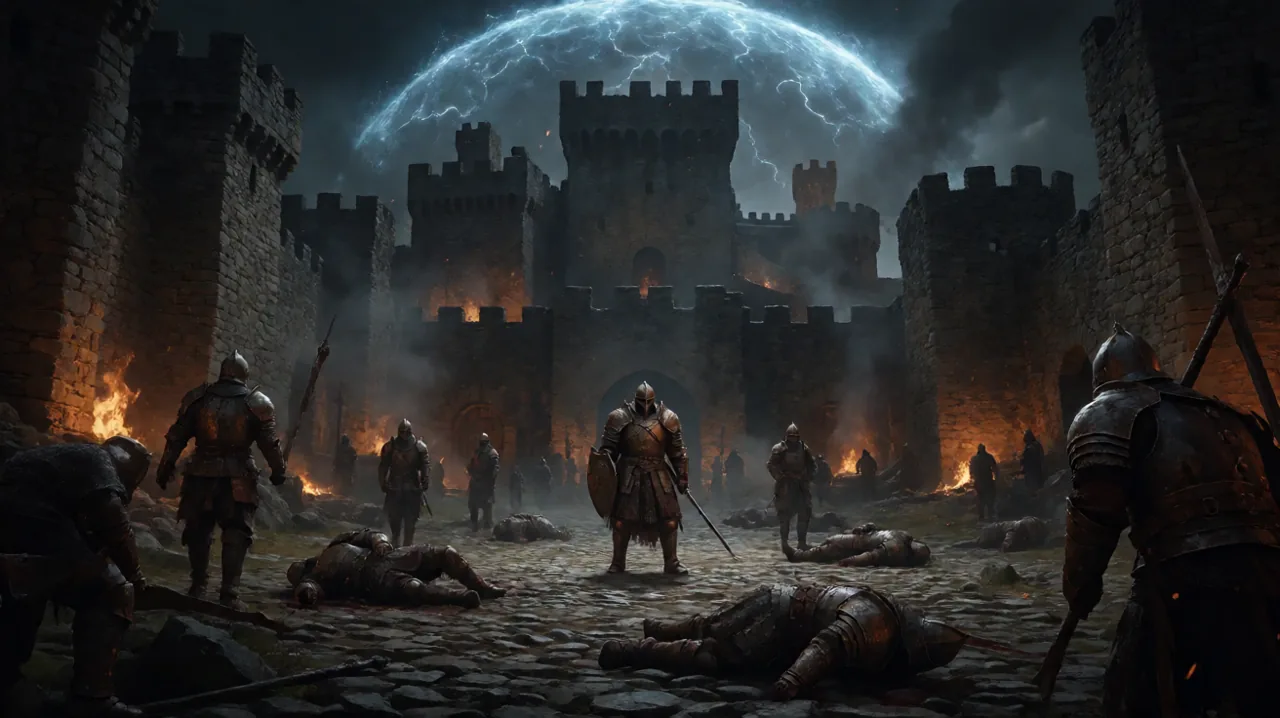
A few days ago, the Gothic 1 Remake community was stunned by a player who managed to reach an astonishing Level 32 without joining a guild during the very first chapter of the game. For most players, Chapter 1 is about surviving scavenging birds and begging for scraps of ore in the Old Camp. For this particular player, it was a genocidal campaign against the entire colony ecosystem.
The immediate question on everyone’s mind was: Did this break the game? The original 2001 release of Gothic was notoriously fragile. Pushing the boundaries of quest triggers, hoarding items before you were supposed to, or killing characters out of order could easily result in a corrupted save file or a permanent softlock. With Alkimia Interactive’s modern overhaul, we now have a definitive answer. The player has successfully rolled the credits, pushing the sequence-breaking limits of the remake even further in subsequent chapters.
Here is a detailed breakdown of how the game’s logic held up against one of the most extreme challenge runs we have seen since launch.
The Foundation: A Chapter 1 Bloodbath
To understand the sheer scale of this run, we have to contextualize what achieving level 32 in Chapter 1 actually entails. The player reported clearing the entire accessible map of anything mortal that could be approached.
This did not just mean killing every single Scavenger, Molerat, and Wolf in the woods. This meant systematically dismantling the high-level threats that are intentionally placed by the developers to gate off late-game areas. The player took down massive Trolls and elemental Golems with severely limited early-game gear. They even picked off the terrifying Orcs guarding the bridge and the isolated tower using hundreds of arrows and a basic bow, exploiting pathing and elevation.
To squeeze out the absolute maximum amount of experience points, the player resorted to non-lethal combat against friendly NPCs. They reported punching two Water Mages into unconsciousness purely for the XP yield—a move that would usually spell disaster if the faction alignment system wasn’t carefully managed. Furthermore, they completed the quest for Thorus by permanently killing Mordrag on the way to the New Camp, rather than just intimidating him to leave.
If you are struggling to build your character properly in the early hours, you might want to review the standard learning points and skills progression, because replicating this Chapter 1 massacre requires absolute perfection in stat allocation.
Derailing the Focus Stones in Chapters 2 and 3
The true test of the Gothic 1 Remake quest infrastructure begins in Chapter 3. Under normal circumstances, Saturas, the head of the Water Mages, tasks you with retrieving the remaining Focus Stones scattered across the colony to detonate the ore mound. The narrative assumes you will visit these locations one by one, meeting specific friends—Lester, Milten, Diego, and Gorn—who help you overcome the environmental puzzles and boss encounters.
Our sequence-breaking player decided to ignore this intended structure. They reported collecting two extra focus stones in Chapters 2 and 3 before Saturas even assigned the quest.
Historically, interacting with these highly scripted objects early could cause massive issues, such as the infamous Lester focus stone softlock. However, the remake handled this beautifully. The player noted that some stones still required “teamwork” mechanics to bypass certain obstacles. Interestingly, they mentioned that the game allowed flexibility here: while Milten was the intended partner for one puzzle, even bringing the notorious follower Mud would theoretically suffice for aggro manipulation. For the Troll canyon, Diego still needed to provide the essential hint regarding the shrinking scroll, but the game gracefully acknowledged that the player already possessed the required artifacts when the time came to hand them in.
This confirms that Alkimia Interactive has implemented dynamic inventory checks for critical path items. If you have the artifact, the dialogue tree simply skips the fetching phase and moves directly to the reward phase, without breaking the underlying script state.
The Old Camp Massacre: Avenging the Fire Mages
Perhaps the most fascinating outcome of this run occurred during the transition into Chapter 4. This is the pivotal narrative moment of Gothic. The Free Mine is attacked, Gomez goes paranoid, and he slaughters the Magicians of Fire. When you approach the gates of the Old Camp, you are turned away with hostility, and if you sneak in, Milten intercepts you with a frantic warning to run for your life.
The game heavily telegraphs that you should flee, regroup with the New Camp, and eventually return in Chapter 5 or 6 equipped with end-game magic or Uriziel to exact your revenge.
The level 32 player did not run.
Instead of treating the Old Camp as a stealth section or a hazard to avoid, they took Milten’s warning, turned around, and completely wiped out the Old Camp castle right then and there. Gomez, Raven, Arto, Scar, and the entire garrison of elite guards were slaughtered chapters ahead of schedule. After single-handedly executing the colony’s most powerful faction, the player calmly walked back to Milten to continue the quest line.
If you are curious about attempting a lesser version of this, you can check our guide on how to loot Gomez’s ancient ore armor early, but doing it in Chapter 4 through brute force alone is a testament to the absurd stat inflation of a level 32 start. The fact that the main narrative did not crumble when Gomez died prematurely proves that the developers anticipated players becoming overpowered and decoupled Gomez’s life state from the critical progression path of the Sleeper. Note that while you can kill the Ore Barons, doing so might lock you out of some late-game trainer interactions, as noted in our piece explaining why Old Camp trainers turn hostile.
Tricking Saturas and Manipulating NPC Aggro
The run was not without its minor technical hiccups, though none proved fatal to the save file. In the later stages, dealing with the Water Mages became chaotic. The player reported that Saturas became hostile because they entered the high mages’ chambers without proper authorization—a standard trespassing trigger in the Gothic engine.
Instead of reloading a save, the player discovered a workaround: sleeping. Using a bed to pass the time managed to de-escalate Saturas’s aggro state, allowing the dialogue to resume. This is a crucial piece of community knowledge. In the original game, angering a key NPC often required casting an expensive “Charm” spell to reset their disposition. In the remake, it appears that the passage of time via sleeping can reset localized hostility, provided you haven’t committed a permanent crime like murder in front of witnesses.
Furthermore, the player intentionally failed the dialogue check to reveal Xardas’s grand plan to Saturas. While this failed a specific journal entry, it did not halt the overarching progression toward the Sleeper’s temple.
The Verdict on Remake Resilience
This completed run serves as a massive stress test for the Gothic 1 Remake. Alkimia Interactive has managed to strike a delicate balance that modern RPGs often struggle with. They preserved the complete mechanical freedom of a late-90s PC RPG—allowing you to kill almost anyone, go anywhere, and overlevel to the point of breaking the intended narrative pacing—while implementing modern safety nets to ensure the main quest remains solvable.
For the speedrunning and challenge run community, this is incredible news. The colony is truly your sandbox. You do not have to play by the rules, and you do not have to fear the dreaded softlock if you decide to take the law of the Barrier into your own hands.