
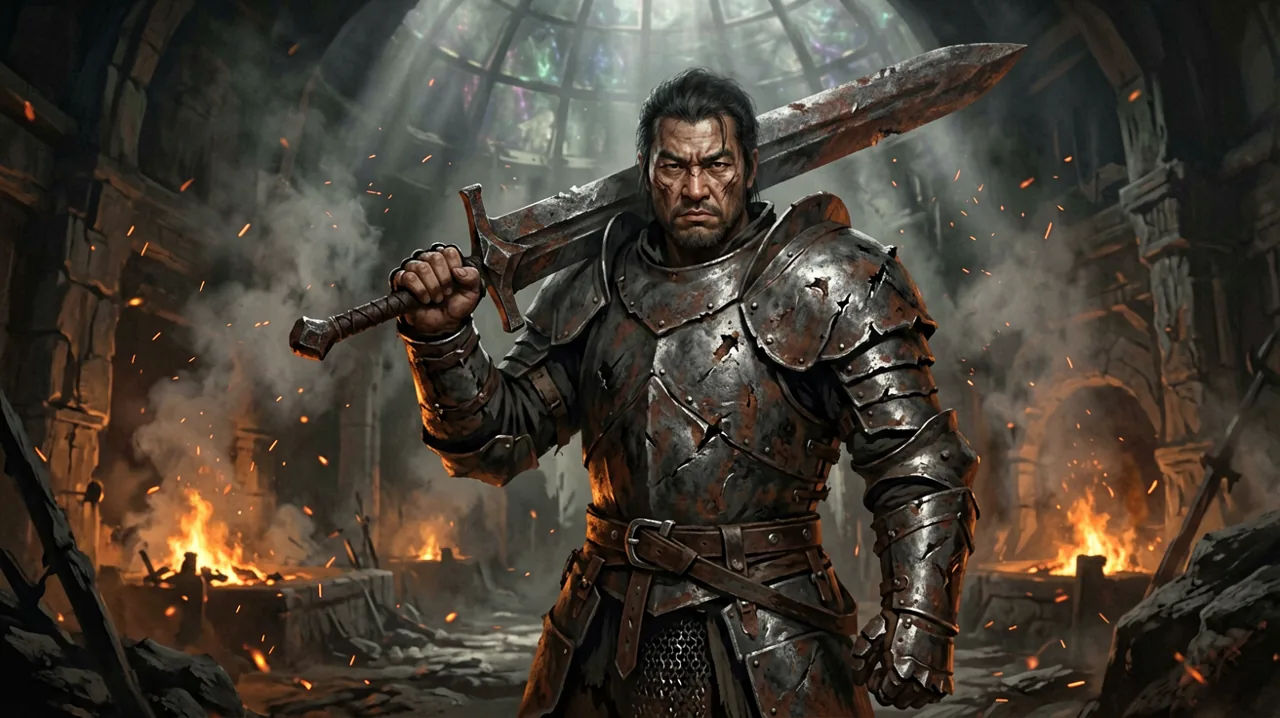
The Valley of Mines is a hostile prison where weakness is met with swift, unyielding death. Whether you are dealing with aggressive scavengers near the starting area or heavily armed guards protecting the Old Camp castle, your survival depends on how you allocate your hard-earned Learning Points. Among the various ways to build a character in Gothic 1 Remake, one path has consistently remained the most popular: the pure Strength (STR) warrior.
In a recent community poll surveying players on their build preferences, a staggering 61.5% of respondents confirmed they chose a Strength-based melee build for their playthrough of the remake. This preference is not a new phenomenon. In the original 2001 game, 67.1% of the community favored Strength builds. By contrast, games like Gothic II: Night of the Raven saw a much more even split, with only 40.4% choosing Strength due to the introduction of powerful dexterity weapons and more accessible magic. The remake has preserved this classic division, keeping the physical melee warrior as the undisputed king of the early and mid-game.
The Mechanics of Strength and Weapon Scaling
Understanding how Strength works is critical to planning your progression. In Gothic 1 Remake, Strength serves two primary purposes: acting as a stat requirement for weapons and directly adding to your damage output. Unlike modern action RPGs where damage scaling is governed by complex percentage multipliers, Gothic’s damage formula remains refreshingly direct. Your total damage with a melee weapon is calculated as the weapon’s base damage plus your Strength value. When you land a critical hit, this full value is applied against the target’s physical protection armor.
This formula makes every single point of Strength you train highly impactful. In the early chapters, raising your Strength from 10 to 30 more than doubles your combat effectiveness, allowing you to bypass the defense thresholds of sturdier beasts like lurkers and snappers. To understand how to control your character in combat, check out our combat-guide.
Melee combat in the remake is divided into two disciplines: one-handed weapons (swords, axes, clubs) and two-handed weapons (greatswords, battleaxes). One-handed weapons offer faster attack speed and allow you to keep a shield equipped or maintain high mobility. Two-handed weapons, while slower and requiring a higher Strength investment, provide superior reach and devastating damage per hit, making them ideal for taking down large monsters or heavily armored human opponents.
Allocating Learning Points and Finding Trainers
You start your journey under the Barrier with baseline attributes and zero combat training. Every level you gain awards you 10 Learning Points (LP). Rather than spending these points immediately on minor utility skills, a dedicated melee warrior must prioritize attribute training and combat mastery. For an in-depth breakdown of how to manage your LP, read our guide on learning-points-and-skills.
Strength cannot be raised simply by fighting; you must find experienced mentors in the Colony who are willing to train you in exchange for Ore. The distribution of trainers across the three camps allows you to build your warrior regardless of which faction you plan to join:
- The Old Camp: Diego is your initial contact and will train your Strength up to 50. If you manage to get past the outer gates, you can also find other warriors who can help you master weapons. For instance, Scatty, the arena master, is the primary trainer for one-handed weapons. If you want to bypass faction requirements early to access these trainers inside the inner castle, refer to our guide on 2026-06-16-gothic-1-remake-how-to-enter-the-old-camp-castle-early-without-faction.
- The New Camp: If you lean toward the mercenaries or rogues, Torlof is your go-to trainer for raw Strength. Cord, a highly respected mercenary, teaches both one-handed and two-handed combat styles.
- The Swamp Camp: The templars value physical discipline as a vessel for spiritual power. Gor Na Toth will train your Strength, while Gor Na Ran can teach you the art of two-handed combat once you prove your loyalty to the Sleeper.
For a complete map of all trainers in the colony, check out all-skill-trainers.
Training a combat skill from untrained to trained, and then to master, changes your character’s combat stance, unlocks faster attack animations, and significantly increases your critical hit chance. For a pure Strength build, reaching at least level 1 in one-handed combat is a priority in Act I.
Early Game Progression and Weapon Milestones
Survival in Act I requires securing a reliable weapon as soon as possible. While dexterity-focused players might seek out ranged options like the 2026-06-26-how-to-get-the-wolfshredder-bow-early-in-gothic-1-remake, melee warriors rely on iron and raw power.
To gather the resources and Ore needed to pay for training and weapons, you must optimize your experience gains early. Our guide on 2026-07-02-gothic-1-remake-how-to-maximize-act-i-xp-and-the-double-dip-execution outlines the best ways to squeeze every drop of experience from the starting region before committing to a camp.
Your first weapon milestone should be replacing your starting rusty sword. Look for weapons with low strength requirements but decent base damage, such as the Digger’s Discipline or a basic iron sword. As your Strength approaches 30 to 40, you can start wielding high-tier one-handed swords that deal upwards of 30-40 damage, allowing you to comfortably hunt wild boars and minor scavengers without risking instant death.
Choosing Your Camp and Late-Game Armor
Your choice of faction heavily influences the armor and weapons available to you in the latter half of the game. The three camps—the Old Camp, the New Camp, and the Swamp Camp—each offer distinct progression paths for a Strength-based warrior:
- Old Camp (Guards): Joining the Old Camp puts you on the path to becoming a Guard. This path grants access to standard guard armor and eventually heavy knight-style plate. In the endgame, players can seek out Gomez’s legendary gear. For a detailed guide on how to acquire this elite defensive set, check out 2026-06-22-gothic-1-remake-how-to-loot-gomez-s-ancient-ore-armor-and-navigate-cha.
- New Camp (Mercenaries): Aligning with the Mercenaries under Lee gives you a rugged, practical warrior path. Mercenaries specialize in heavy two-handed combat and wear reinforced leather and metal plates designed for mobility in the dark caverns of the Free Mine.
- Swamp Camp (Templars): The Templars combine high Strength builds with basic support magic. Wielding large two-handed swords, they rely on magic scrolls and basic runes to heal or crowd-control enemies while letting their massive swords do the heavy lifting.
No matter which path you select, you will eventually want to check out the general overview of best-builds and review the complete list of weapons-and-armor to ensure your statistics align with your endgame goals.
Why the Melee Meta Endures
The community’s strong preference for Strength builds is rooted in the structure of the game’s economy and world design. Unlike other fantasy RPGs where magic is readily available from the start, rune magic in Gothic is heavily gated behind story progress and requires a vast investment of Ore and Learning Points. For a beginner, trying to build a pure mage in Act I is an exercise in frustration, as mana pools are small, spell scrolls are expensive, and runes are locked behind later chapters.
A Strength build, by contrast, is active, reliable, and immediately satisfying. It forces you to master the timing of blocks, side-swings, and forward thrusts. By the time you reach the deeper mines and face the colony’s most dangerous creatures, your warrior will have transformed from a defenseless convict into a walking fortress capable of trade-offs that make the physical barrier feel like a minor inconvenience.