
More than a month has passed since Alkimia Interactive dropped the Gothic 1 Remake on PC and current-gen consoles, and the dust inside the penal colony is far from settling. While many players have fully mapped out the treacherous paths between the three major camps, the community surrounding the game remains incredibly active, pushing the boundaries of what is possible within the Valley of Mines. This week has brought major developments on the modding front, particularly with the highly anticipated release of a multiplayer mod alpha. Simultaneously, technical roadblocks for Linux and Steam Deck users are coming into sharp focus, and a fascinating debate is raging across social media platforms regarding the game’s intentionally brutal, old-school design philosophy.
The GhostCoop Alpha is Now Available on Nexus Mods
A little over a week ago, we reported on the early testing phases of a cooperative multiplayer project for the game. Developing multiplayer functionality for a massive, single-player open-world RPG built on Unreal Engine 5 is a monumental task, but the modding community has hit a major milestone faster than anyone anticipated. Modder Eldam23 has officially released the public Alpha version of the GhostCoop mod, which is now available for download on Nexus Mods.
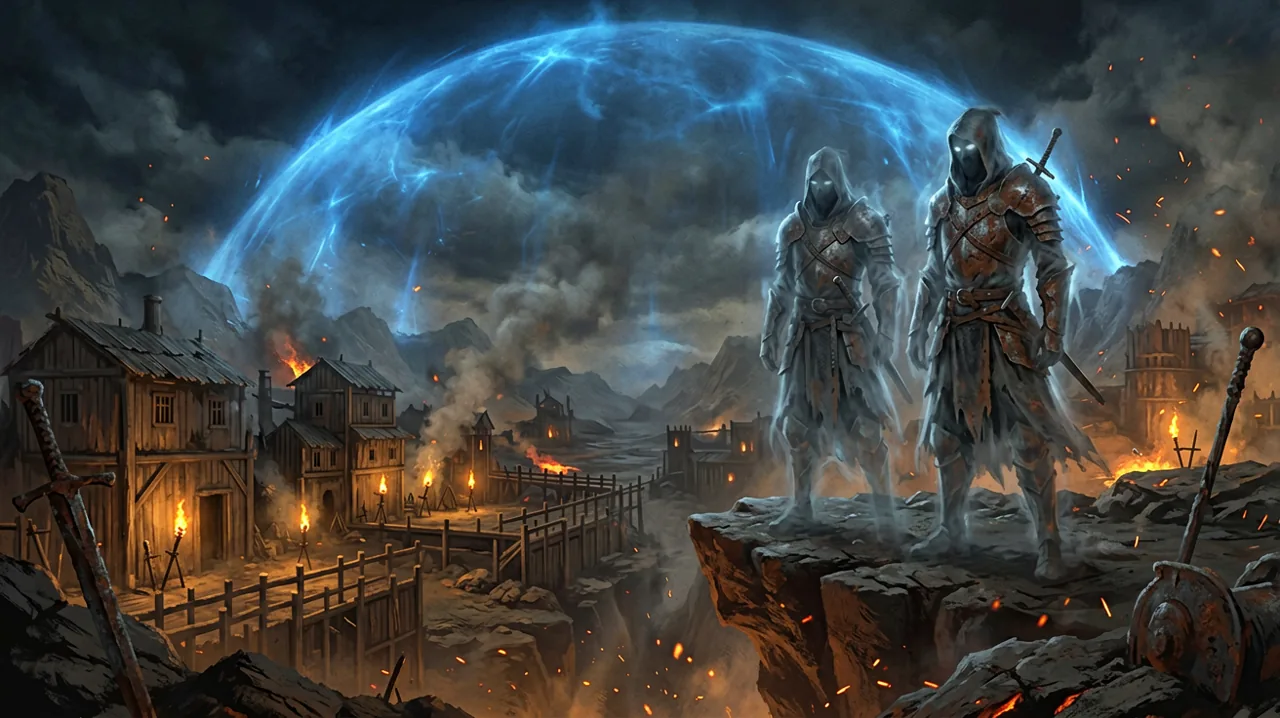
Unlike traditional, fully-synced cooperative mods—which require complex networking to synchronize world states, NPC behavior, and quest progression—GhostCoop currently operates exactly as its name implies. It allows you to see your friends as phantom figures exploring the penal colony alongside you. They exist in your world as translucent visual avatars, mirroring their real-time movements, but they do not directly interact with your world state, attack your enemies, or trigger your quests.
While it might sound limited at first glance, the atmosphere this creates is phenomenal. The Valley of Mines is a notoriously isolating and oppressive place. Running through the dark forests at night and suddenly seeing the spectral form of your friend desperately fleeing from a Shadowbeast adds an entirely new layer of shared experience to the game. It allows players to guide each other to hidden loot, coordinate exploration, or simply share the grim reality of life under the Barrier. The installation process requires some tinkering, but the Nexus Mods page provides a detailed breakdown of the setup. As this is an alpha build, players should expect desyncs and occasional visual bugs, but it stands as a massive leap forward for the Gothic modding scene.
The Technical Hurdle: UE4SS Modding on Linux and Steam Deck
While Windows users are enjoying a rapidly growing library of Nexus Mods—from texture overhauls to gameplay tweaks—Linux and Steam Deck users are running into a frustrating technical roadblock. A recent discussion on the Linux gaming subreddit highlighted the severe difficulties players are facing when trying to inject the UE4SS (Unreal Engine 4/5 Scripting System) framework into the Gothic 1 Remake.
For those unfamiliar with Unreal Engine modding, UE4SS is a vital open-source scripting system and debugging tool. It allows modders to execute custom Lua scripts, inspect the Unreal Engine object hierarchy in real-time, and modify game parameters without needing access to the official developer source code. It has essentially become the backbone for advanced modding in modern Unreal Engine titles. However, the framework relies heavily on Windows-specific DLL injection methods—specifically XInput or DXGI wrapping.
When Linux users, playing through compatibility translation layers like Proton or Wine, attempt to load these injected DLLs, the game often either ignores them entirely or crashes straight to the desktop. Reddit user TightAssistance2223 documented their struggles on CachyOS, noting that they had tried multiple community workarounds from other popular Unreal Engine games, including Palworld and Remnant 2, but absolutely nothing functioned for the Gothic 1 Remake. The game simply refuses to hook the scripts.
For a game that is otherwise highly praised for its performance on the Steam Deck, being locked out of the most advanced community mods is a bitter pill to swallow. Currently, the Linux modding community is actively investigating alternative injection methods, but until a breakthrough is made, Steam Deck players will largely have to rely on standard pak-file replacements rather than complex script-based modifications.
The Mainstream Debate: A Masterpiece or Too Unforgiving?
As the initial launch hype subsides, a deeply polarizing debate has emerged regarding the game’s core design philosophy and its overall mainstream appeal. Gothic 1 Remake is fundamentally an old-school RPG draped in gorgeous Unreal Engine 5 visuals. It makes zero concessions for modern gaming habits, and this has led to wildly divergent player experiences.
On the German subreddit /r/zocken, player RetroButton shared a scathing review after spending roughly ten hours in the Valley of Mines. Despite praising the visual overhaul and the atmospheric setting, they expressed immense frustration with the gameplay loop. In their view, the combat mechanics feel overly punishing, the lockpicking mechanics seem designed by a madman, and the complete absence of modern quest markers forced them to rely heavily on YouTube walkthroughs just to find specific characters or items. Ultimately, the overwhelming friction of the world resulted in them uninstalling the game.
This sentiment is completely understandable. Modern game design has conditioned players to expect frictionless, highly guided experiences. If a quest giver tells you to find a lost artifact, you typically open your map, follow a glowing dotted line, and press a button at the destination. Gothic vehemently rejects this philosophy. When an NPC gives you directions, you must actually listen to the dialogue. They will tell you to ‘follow the river south, take a left at the ruined tower, and avoid the wolves near the cave.’ If you do not pay attention, or if you stray from the path, the game will punish you with a swift death. This design forces players to engage with the map and locations on a profound, geographical level. You learn the layout of the colony not because a minimap tells you where you are, but because your survival depends on knowing which paths are safe.
The Beauty of Hardcore Design
Conversely, on the World of Gothic subreddit, user mshehab22 shared the exact opposite journey. Having no prior nostalgia for the original 2001 release, they expected a straightforward, perhaps slightly dated RPG experience. Instead, they found themselves utterly engrossed, declaring it one of their favorite games of all time. The lack of handholding, which drove others to uninstall, was exactly what pulled them in. This led them to pose a fascinating question: Why didn’t the Gothic 1 Remake become a massive, mainstream blockbuster on the level of Skyrim or The Witcher 3?
The answer lies in that very friction. When you are tossed through the Barrier, you are at the absolute bottom of the food chain. The progression system does not hand out power freely. Instead of automatically gaining stats upon leveling up, you earn Learning Points, which must be spent by physically traveling to specific trainers scattered across the colony. You want to learn how to swing a sword without stumbling? You have to find a veteran fighter, pay them in precious magical ore, and have them teach you. You need to consult our combat guide and learn the rhythmic timing of strikes just to survive a one-on-one encounter with a basic Scavenger.
This creates a tangible connection to the world and its inhabitants, making every hard-earned skill feel profoundly rewarding. If you want to join the Old Camp, you must earn the respect of its shadows and guards through menial, often dangerous tasks. The same applies whether you seek the rogue-heavy atmosphere and join the New Camp or embrace the esoteric rituals to join the Swamp Camp. The barrier to entry is high, but the payoff is an unparalleled sense of immersion. It is a game that respects your intelligence but demands your patience, making it a cult classic rather than a universally appealing blockbuster.
Will We See a Gothic 2 Remake?
The ongoing discussion inevitably leads to the future of the franchise. While the hardcore mechanics might keep the game from achieving mainstream ubiquity, its commercial success is undeniable. With strong sales figures and a fiercely dedicated player base, community speculation is running rampant about Alkimia Interactive’s next steps.
Gothic 2 is widely considered one of the greatest RPGs ever made, expanding the scope of the world far beyond the Valley of Mines and into the city of Khorinis. If Alkimia tackles a Gothic 2 Remake, they will face the ultimate balancing act: how do you preserve the uncompromising, brutal soul of the series while smoothing out just enough of the technical friction to welcome a broader audience? Until then, the community will continue to explore, mod, and survive the harsh reality of the colony.