
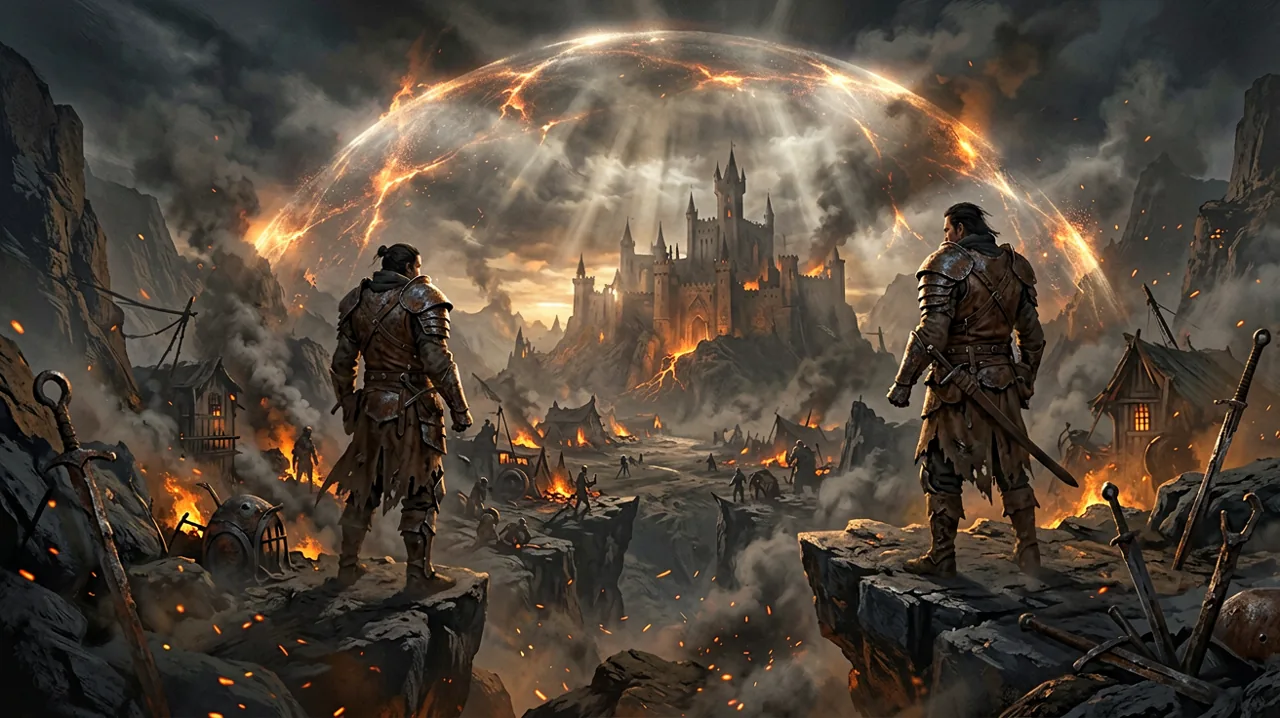
Following a highly successful launch that saw hundreds of thousands of players thrust back into the brutal penal colony, Alkimia Interactive and THQ Nordic have used the recent THQ Nordic Digital Showcase 2026 to deliver a heartfelt message of gratitude to the community. However, the developers did not just offer their thanks; they laid out a robust, exciting post-launch roadmap for the Gothic 1 Remake that promises to expand the game’s lifespan well into the future.
Scheduled to arrive over the next couple of months, this wave of updates will introduce highly requested features that target both hardcore traditionalists and newcomers. The upcoming additions include a dedicated Photo Mode, the glorious return of the legendary Marvin Mode, official Mod Kit support, and mysterious “Alternative progression mechanics.”
Here is a detailed breakdown of everything coming to the Valley of Mines and what these features mean for your ongoing survival in the colony.
The Return of Marvin Mode: Ultimate Sandbox Freedom
For veterans of the original 2001 classic RPG, the phrase “Marvin Mode” carries an immense amount of nostalgia. In the classic engine, typing a specific sequence of keystrokes unlocked the developer console, essentially handing the player the absolute keys to the kingdom. Alkimia Interactive has officially confirmed that Marvin Mode is making a triumphant return to the Gothic 1 Remake, acting as the game’s fully sanctioned developer mode.
This is a massive inclusion for players who want to break the boundaries of the established game world. Based on the developer’s official notes, this feature will allow you to spawn creatures on command, generate specific items and weapons out of thin air, teleport instantly across the massive map, and generally cause chaos within the heavily guarded walls of the colony.
From a practical, gameplay-focused standpoint, Marvin Mode will be an invaluable tool for testing out complex character builds. Character progression in this game is notoriously unforgiving, and misallocating your precious points can result in a character that struggles to defeat even a basic Scavenger in the later acts. With Marvin Mode enabled, players will be able to quickly grant themselves experience points, boost their attributes, and test whether they want to commit to a heavy two-handed Combat Guide setup or focus entirely on mastering devastating Rune Magic.
It also removes the friction for completionists who have already beaten the main storyline and simply want to experiment with different faction choices. You can easily manipulate your standings, allowing for quick transitions between the Old Camp, New Camp, and the enigmatic Swamp Camp just to see how the world and its inhabitants react to the Nameless Hero.
Official Mod Kit Support: Handing the Reins to the Community
Perhaps the most significant and long-lasting announcement from the showcase trailer is the upcoming release of an official Mod Kit. The original Gothic titles have been kept alive for two and a half decades almost entirely by a fiercely dedicated, highly talented modding community. Entire expansion-sized modifications and total conversions have been meticulously built on the aging ZenGin engine over the years. Now, Alkimia Interactive is giving players the modern tools to create their own custom content directly within Unreal Engine 5.
The potential here is absolutely staggering. A formal Mod Kit will allow creators to design custom quests, introduce completely new Weapons and Armor sets, tweak enemy artificial intelligence, and perhaps even expand the physical boundaries of the map itself. We can reasonably expect the community to swiftly start rebalancing the game’s economy, perhaps adjusting the value of standard currency and animal trophies, or creating hardcore survival overhauls that make the early game even more punishing.
Furthermore, this opens the door for community-driven quality-of-life improvements. While Alkimia has been highly diligent with their rapid post-launch support—such as the recent Patch 1.0.4 that addressed NPC navigation and quest logic—a Mod Kit empowers the player base to iterate on the game at their own rapid pace. If the past twenty-five years of history is any indicator, the global modding scene will treat this UE5 framework as a blank canvas for some of the most ambitious fan projects in the entire action RPG space.
Alternative Progression Mechanics: What Could It Mean?
Among the straightforward and expected announcements of photo modes and mod tools, Alkimia tucked in a very brief mention of “Alternative progression mechanics.” The studio has remained tight-lipped on the exact numerical details, leaving the community to actively speculate on what this entails for the core gameplay loop.
Currently, the character progression system mirrors the classic game faithfully: you gain experience through combat and quests, level up to earn a set number of points, and then you must physically spend those points (along with hard-earned ore) at specific NPC trainers scattered across the world. You have to actively seek out characters like Diego for strength training or Scatty for one-handed weapon mastery, which forces you to constantly navigate the dangerous map.
Community-reported theories and discussions suggest that “Alternative progression” could introduce a system more akin to modern role-playing games, perhaps allowing players to allocate stats and learn skills directly from a user interface menu without needing to track down trainers in person. This would be a massive time-saver for players who find the diegetic, immersive trainer system tedious upon a second or third playthrough.
Another strong community theory is that Alkimia might implement a scaling attribute cost system similar to the one found in the Gothic 2: Night of the Raven expansion, where raising a specific stat becomes progressively more expensive in terms of learning points as the stat gets higher. This would provide a severe, demanding challenge for veterans who feel the current stat progression is too lenient, effectively forcing players into creating highly specialized Best Builds rather than characters who can easily master every single weapon and magic circle simultaneously.
Capturing the Beauty of the Barrier: Photo Mode
The Valley of Mines has never looked better than it does in this Unreal Engine 5 remake, and it has been a slight disappointment that players haven’t had a proper, built-in way to document their journey without user interface elements cluttering the screen. The upcoming Photo Mode will finally solve this issue, allowing players to pause the frantic action, adjust camera angles, apply cinematic filters, and capture the grim, atmospheric beauty of the penal colony.
From the oppressive, claustrophobic depths of the underground mines to the ethereal, visually stunning atmosphere of the sect camp, the dynamic lighting engine provides endless opportunities for virtual photography. Expect to see the community flooding social media with dramatic, perfectly framed shots of the Nameless Hero facing down massive stone golems, or beautifully timed captures of a fire spell illuminating the dark night sky directly against the magical blue backdrop of the overarching Barrier.
A Glimpse into the Future: 2027 and Beyond
To cap off their broadcast, Alkimia Interactive directly addressed the elephant in the room: What comes next after the remake is fully updated? The development team acknowledged that they have heard the constant, passionate questions from fans regarding their next major studio project.
While they stated clearly that their definitive answer will take some time to prepare, they firmly teased that they might officially reveal their next game during the THQ Nordic Showcase in 2027.
It is incredibly difficult not to immediately assume a Gothic 2 Remake is in the early planning stages. Given the strong commercial sales and highly positive critical reception of this first remake, continuing the overarching story of the Nameless Hero on the island of Khorinis seems like the most logical and financially sound next step. However, Alkimia could also be secretly working on an entirely original intellectual property that utilizes the complex RPG systems and engine architecture they have spent years building. Whatever it turns out to be, the studio has proven their immense capability to handle hardcore, immersive role-playing games with the utmost respect and passion.
The Valley of Mines will remain a dangerous, captivating, and ever-evolving destination for years to come. We will continue to monitor the developer updates and provide deep dives into these new features as soon as they officially drop.