
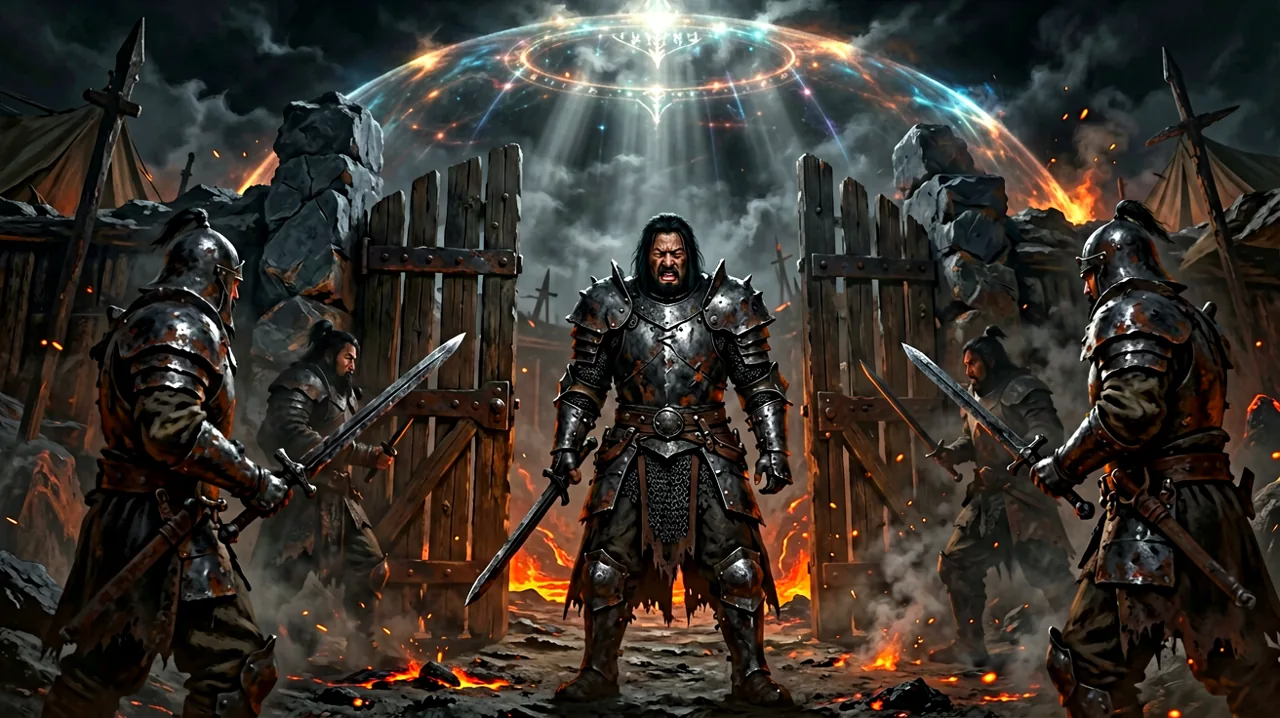
The release of the Gothic 1 Remake by Alkimia Interactive and THQ Nordic has successfully opened the gates of the Colony to a massive influx of newcomers. While veterans of the 2001 classic are reveling in the nostalgia of the magical Barrier, new players are experiencing the brutal, unforgiving design of Piranha Bytes’ original vision for the first time. Over the weekend, community forums like Reddit have been flooded with feedback from players who have just rolled the credits, and a fascinating trend has emerged. Modern gaming sensibilities are violently clashing with old-school RPG mechanics, leading to widespread confusion over hostile NPCs, intense frustration with the final boss, and debates over late-game weapon balance.
Whether it is the sudden realization that the Old Camp trainers no longer want to teach you two-handed sword techniques, or the agonizing discovery that the game’s difficulty cannot be lowered mid-playthrough without wiping your progress, the Gothic 1 Remake is proving to be a harsh instructor. We are looking closely at the recent community feedback to explain why your beloved Old Camp trainers are suddenly trying to kill you, examine the controversy surrounding the final boss encounter for melee builds, and offer survival strategies for those navigating the treacherous final chapters.
The Old Camp Trainer Lockout: A Feature, Not a Bug
One of the most common and loudest complaints surfacing from first-time players involves a sudden and severe progression block occurring right around the end of Act 3 and the beginning of Chapter 4. Players who pledged their absolute loyalty to the Old Camp and invested heavily in strength and two-handed weapon builds are finding themselves completely cut off from their primary trainers. According to multiple community reports, these crucial NPCs inexplicably become hostile, refusing to offer dialogue and immediately drawing their weapons upon spotting the Nameless Hero. For players sitting on dozens of unspent Learning Points, this feels incredibly unfair and is frequently misreported as a game-breaking bug.
However, veterans of the franchise know that this is not a glitch; it is one of the most defining narrative moments in the entire Gothic timeline. Without delving into heavy endgame spoiler territory for those still navigating the early chapters, the political landscape of the Valley of Mines is a powder keg waiting for a spark. As you progress through the main narrative and collect the focus stones, specific events trigger a massive shift in the power dynamics of the penal colony. The Ore Barons, led by the ruthless Gomez, make drastic decisions that result in the Old Camp going into full lockdown.
If you are aligned with them, you might suddenly find yourself branded a traitor or an enemy of the state based purely on the shifting allegiances and the paranoia of the camp’s leadership. This means that trainers like Thorus will no longer offer you their services. Instead, they will offer you the sharp end of a blade. This design philosophy is a hallmark of the Gothic series. The world does not statically revolve around the player; it reacts organically to the story. If a faction goes to war or closes its borders, their NPCs will act accordingly. For modern players accustomed to safe hubs where trainers are immortal and available 24/7, this dynamic world state is a massive shock to the system.
If you find yourself locked out of the Old Camp, you have not ruined your save file. You simply need to adapt. This is the exact moment when you should seek out the mercenaries in the New Camp or the fanatic templars in the Swamp Camp to continue your training. If you need help locating alternative teachers to spend those hard-earned levels, consult our All Skill Trainers guide.
The Trap of Hoarding Learning Points
The sudden hostility of the Old Camp perfectly highlights a critical mistake that many modern RPG fans make when booting up the Gothic 1 Remake: hoarding Learning Points. In contemporary open-world games, saving up skill points until you find the perfect weapon or unlock the ultimate tier of abilities is a standard and highly encouraged strategy. In the Valley of Mines, it is practically a death sentence.
Because the availability of trainers is tied directly to the narrative progression and your standing with the Three Camps, waiting too long to spend your LP can result in you facing late-game supernatural enemies with mid-game stats. If you know you are building a two-handed warrior, you must max out your training as soon as you have the ore and the points available. Do not wait for a “better time,” because the situation inside the Barrier is unpredictable. If you have been heavily relying on Old Camp trainers, make absolutely sure your core combat skills are maximized before completing the major quests that trigger the late-game acts. For a full breakdown on how to optimize your leveling curve before the narrative pulls the rug out from under you, refer to our Learning Points and Skills breakdown.
The Melee Nightmare Against the Final Boss
Another major talking point dominating community spaces right now is the late-game combat balance, specifically regarding the final boss encounter in the Sleeper’s Temple. Players who have dedicated their entire forty-hour playthrough to close-quarters combat—wielding massive swords or axes—are reporting extreme frustration in the final hours of the campaign.
Pure melee builds are currently finding the final boss “miserable” to fight. Players report having to reload the encounter dozens of times, struggling to land consistent hits or survive the devastating area-of-effect magical attacks that the boss relentlessly unleashes. The mechanics of the final encounter require a level of mobility and precise timing that heavy two-handed weapon users inherently lack. Some community members have even resorted to exploiting the boss’s hitboxes using summoning scrolls and offensive magic scrolls to slowly chip away at the health bar, abandoning their primary melee weapons entirely.
The Sleeper’s Temple is designed to test every single aspect of your character’s build. While the original 2001 game also featured a highly specific final encounter that required interaction with quest items rather than pure brute force, the Remake seems to be putting immense and perhaps disproportionate pressure on traditional melee fighters. If you are heavily invested in strength, it is highly recommended to stock up on utility and spell scrolls before passing the point of no return. Summon Demon scrolls, Fire Rain, and Ice Wave can provide the necessary crowd control and burst damage that a standard sword swing simply cannot deliver against late-game threats.
Do not let your pride force you into a purely physical confrontation. The Nameless Hero survives by any means necessary, and mixing magic with steel is often the only way out. For more nuanced tactics on surviving these brutal endgame encounters, you can review our Combat Guide and our previous coverage on Late Game Survival and Defeating the Final Boss.
The Difficulty Lock: A Cruel Taunt
Perhaps the most amusing, yet genuinely frustrating, revelation for new players is how the Gothic 1 Remake handles its difficulty adjustments. The game features a dynamic tip system that occasionally prompts players who are dying repeatedly. A message will appear on screen suggesting that if the game is proving to be too difficult, the player can easily lower the difficulty in the settings menu.
However, as many battered and bruised players have discovered while getting stomped by endgame enemies, this prompt is somewhat of a cruel taunt. If you actually attempt to change the difficulty from the options menu mid-game, you will be met with a harsh reality: the game requires a complete restart from the beginning to apply the new setting. The difficulty you select when you first wake up in the colony is the difficulty you are locked into for the entirety of the adventure.
This unyielding approach is currently dividing the player base. Some praise it as a true return to hardcore RPG roots, forcing players to live with the consequences of their initial choices and overcome adversity through better preparation and leveling. Others feel that the on-screen prompts are wildly misleading, offering a mechanical lifeline that does not actually exist. If you are just starting your journey, be absolutely certain of your choice. If you choose the highest difficulty, expect to earn every single victory through blood and sweat.
The Overpowered Troll Bane Axe Anomaly
On the complete opposite end of the melee struggle, the community has identified a specific weapon that might be severely overtuned, bordering on game-breaking. The “Troll Bane” axe is currently making waves across Reddit as a weapon that reportedly trivializes almost all enemy encounters, even on the punishing “Gothic” difficulty setting.
Players report that once this specific two-handed axe is acquired, previously terrifying enemies—including elite Orcs and massive beasts—can be dispatched with minimal effort. In a game where the economy is tight and combat scaling is famously harsh, finding a weapon that completely shatters the difficulty curve is both a blessing and a curse. While the developers at Alkimia Interactive have been diligent with recent performance patches, it remains to be seen if the Troll Bane axe will be nerfed or rebalanced in a future gameplay update.
For now, if you are genuinely struggling with the mid-to-late game power spike and are tired of being bullied by the wildlife, hunting down this specific axe might be your golden ticket to a much easier time in the colony. Be sure to consult our comprehensive Weapons and Armor database for its exact stat requirements and location.
Adapting to Survive the Colony
The ongoing discourse surrounding the Gothic 1 Remake proves that the developers have successfully recreated the intense friction that made the original game such a legendary cult classic. The world of the colony is inherently unfair by design. Trusted trainers will abandon you, specific weapons will unexpectedly break the balance, and massive bosses will force you to abandon your preferred playstyle.
To survive the Valley of Mines, you must remain flexible. Keep a diverse inventory of magical scrolls, even if you identify as a pure warrior. Spend your Learning Points early and often to stay ahead of the difficulty curve. And above all, pay very close attention to the unfolding story—because in the world of Gothic, the political plot has direct and severe consequences on the gameplay mechanics.