
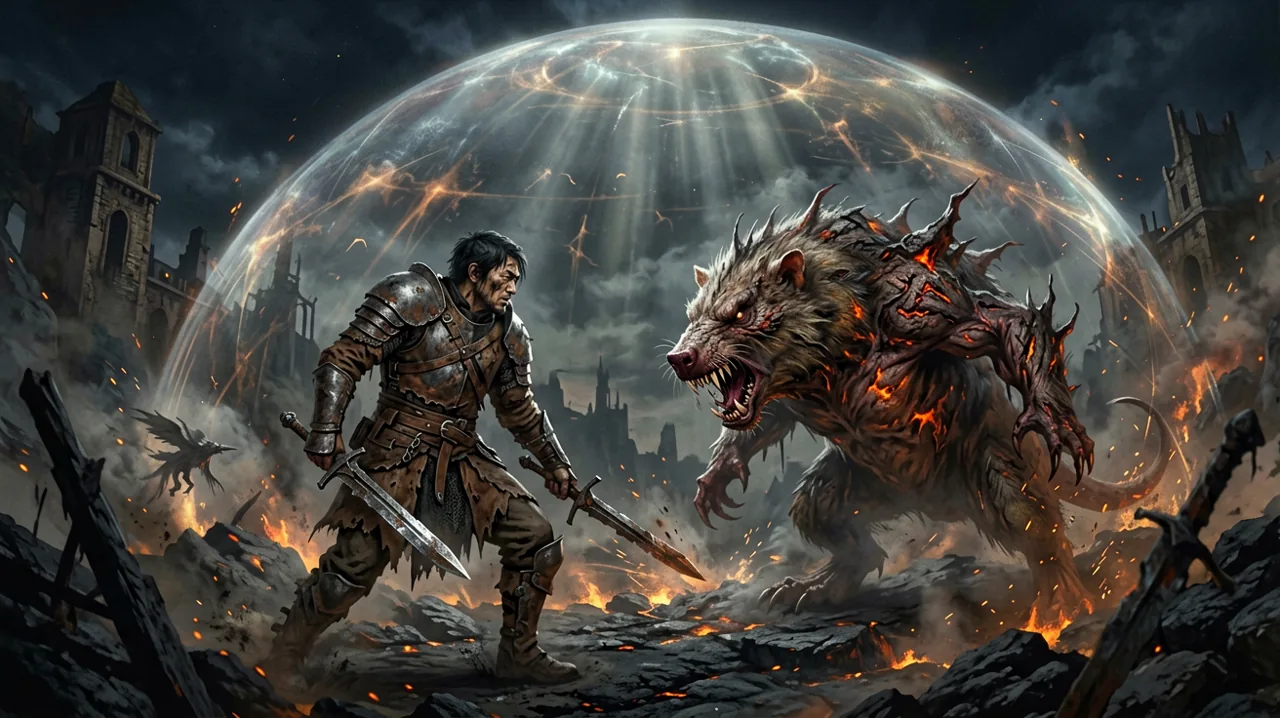
Alkimia Interactive and THQ Nordic’s Gothic 1 Remake has been out for a couple of months now, successfully bringing the legendary 2001 penal colony into Unreal Engine 5. While hardcore veterans and long-time Piranha Bytes fans have praised its faithful, uncompromising recreation of the original map and systems, a growing segment of modern RPG fans are experiencing severe culture shock.
A recent, highly debated discussion on the World of Gothic subreddit perfectly encapsulates this generational divide in game design, with newer players questioning if the archaic philosophies from over two decades ago still work in 2026. From getting instantly obliterated by early-game wildlife to the complete absence of a modern character creator, the friction is palpable. A community member recently shared their frustration online, stating they reached Chapter 3 but couldn’t understand the hype, criticizing the fetch quests, robotic voice acting, and rigid progression. Here is a breakdown of the community’s biggest friction points, why the colony is designed to be this unforgiving, and how struggling players can adjust their mindset to survive behind the magical Barrier.
The “Molerat Filter” and the Reality of a Static World
One of the most common complaints—and the exact reason the original game was infamous for early uninstalls—is the brutal, seemingly impossible early-game difficulty. The Reddit user noted they quit the original game years ago after being “one-shotted” by a Molerat, and similar complaints are surfacing daily regarding the remake. Modern action RPGs often employ sophisticated level scaling, ensuring that the wolves, bandits, and monsters you meet at level one are appropriately tuned for a fair, balanced fight.
The Gothic 1 Remake aggressively rejects this philosophy. The Barrier encloses a static, hand-placed ecosystem. If you wander off the main path into the woods with nothing but a rusty pickaxe, a single Molerat or Scavenger will absolutely destroy you. This isn’t poor balance or an oversight by the developers; it is a deliberate mechanism to enforce spatial awareness and instill a deep respect for the environment. The colony is a prison, and as a new arrival, you are unequivocally at the bottom of the food chain.
Instead of button-mashing your way to victory, your early hours should be spent running away, relying on NPC escorts between camps, and carefully gathering ore by completing non-combat tasks. You are expected to avoid fights you cannot win. When you finally gather enough resources to buy a decent weapon and invest your learning points with a trainer, returning to effortlessly kill that Molerat that bullied you hours earlier provides a sense of earned progression that scaling RPGs rarely achieve.
The Missing Character Creator: Why You Can’t Customize the Nameless Hero
Another major critique raised by modern players is the complete lack of cosmetic character customization. “Basically zero, not even mentioning the character itself,” noted the frustrated player regarding their options. In an era where spending two hours tweaking jaw sliders, hairstyles, and eye colors is the baseline expectation for western RPGs, being forced to play as the predefined “Nameless Hero” with a fixed face and body type can feel incredibly restrictive.
Visual progression in the Gothic universe is tied directly to your faction alignment and societal status, not a menu at the start of the game. You arrive in the colony in literal rags. Your appearance evolves only when you earn the right to wear faction-specific armor.
Becoming a Shadow in the Old Camp grants you their iconic red leather armor, instantly signaling your allegiance and elevated status to every NPC in the colony. Joining the Mercenaries in the New Camp offers rugged, heavy plating suited for rogues, while the Templars in the Swamp Camp wear ornate, functional gear tied to their fanatical beliefs. Your armor is your identity. It must be earned through sweat, reputation, and loyalty quests, rather than selected from a slider. This makes the eventual visual upgrade immensely satisfying, even if it lacks modern cosmetic flair.
Build Variety: Where the Real Customization Lies
While cosmetic choices are locked behind faction progression, mechanical customization is where the game truly opens up. The classless system means your combat style is entirely dictated by how you spend your Learning Points upon leveling up. You can focus your attributes on strength to wield heavy two-handed weapons and crossbows, or invest heavily in mana to master rune magic and powerful spell scrolls.
The key limitation is that you cannot be a master of everything in a single playthrough; specializing early is crucial for survival. A pure dexterity build using bows operates entirely differently from a strength-focused melee fighter. You must seek out specific trainers across the map to learn new fighting stances, which physically change how the Nameless Hero swings a sword—transforming clunky, amateurish swings into swift, professional combos. This is where the RPG depth shines, offering immense replayability for those who want to experience the game as a Fire Mage versus a hardened Mercenary.
Chapter 3 Pacing and the “Fetch Quest” Critique
The mid-game pacing, particularly around Chapter 3, has also drawn sharp criticism from newcomers. Players have pointed out that progressing the main narrative requires completing numerous side tasks that essentially boil down to basic fetch errands. “Half of the about 25 hours in the game is spent running around looking for the characters that give you the requested item and then you have to go back,” the community member complained, comparing the structure unfavorably to older, jankier titles like Two Worlds.
It is undeniably true that the game involves significant backtracking across the colony’s map. However, unlike modern MMO-style fetch quests where you mindlessly follow a glowing GPS marker, these journeys in Gothic are intended to be dangerous expeditions. Searching for the Focus Stones alongside iconic NPCs like Lester, Milten, Diego, and Gorn forces you to navigate treacherous terrain, utilize your hard-earned combat skills against specific enemy types, and manage your healing resources.
The traversal itself is the challenge. Alkimia Interactive has largely preserved the original quest structure, meaning modern conveniences like fast-travel waypoints are absent by design. You have to learn the geography, remember where specific monsters spawn, and plan your routes carefully. What feels like a chore to a modern player is actually an excuse to push you into uncharted territory to test your build.
Voice Acting and Dialogue Controversies
The community discussion also touched upon the game’s dialogue delivery, describing it as “robotic” and noting that some characters feel unengaging. The voice acting in the Gothic franchise has always had a peculiar, slightly campy charm, heavily influenced by its original German localization and the technical limitations of 2001.
The remake attempts to capture that specific dry, cynical tone, which can sometimes come across as stiff or unnatural to players expecting the cinematic, motion-captured performances of a modern high-budget exclusive. The dialogue is direct, often transactional, and lacks flowery exposition. Characters in the colony don’t care about your backstory; they only care about what you can do for them. While the graphics have been modernized beautifully, the script and its delivery remain deeply rooted in European PC RPG traditions, which is an acquired taste for some.
Technical Watch: Unreal Engine Crashes on GeForce NOW
Aside from design debates, we are also tracking some recent technical issues impacting a specific subset of the player base. Several users have reported that the game is currently suffering from Unreal Engine crashes when played via Nvidia’s GeForce NOW cloud gaming service.
According to community reports, the game crashes back to the desktop just a few seconds after launching the application. While the PC and console native versions remain largely stable following recent post-launch patches, cloud gamers seem to be hitting a specific compatibility snag. If you rely on GeForce NOW to explore the colony, you might want to hold off on your playthrough for the next few days until a hotfix is deployed by either THQ Nordic or Nvidia.
Conclusion
The friction new players are experiencing with the Gothic 1 Remake is a reflection of how faithful Alkimia Interactive has been to the original vision. It is a game that refuses to coddle its audience. The lack of level scaling, the restrictive visual customization, and the demanding exploration are not flaws of a bygone era—they are the core pillars of an atmospheric, rewarding simulation. It certainly isn’t for everyone, but for those willing to accept the colony on its own harsh terms, the journey from a defenseless prisoner to a powerful hero remains a uniquely satisfying experience that few modern games dare to replicate.