
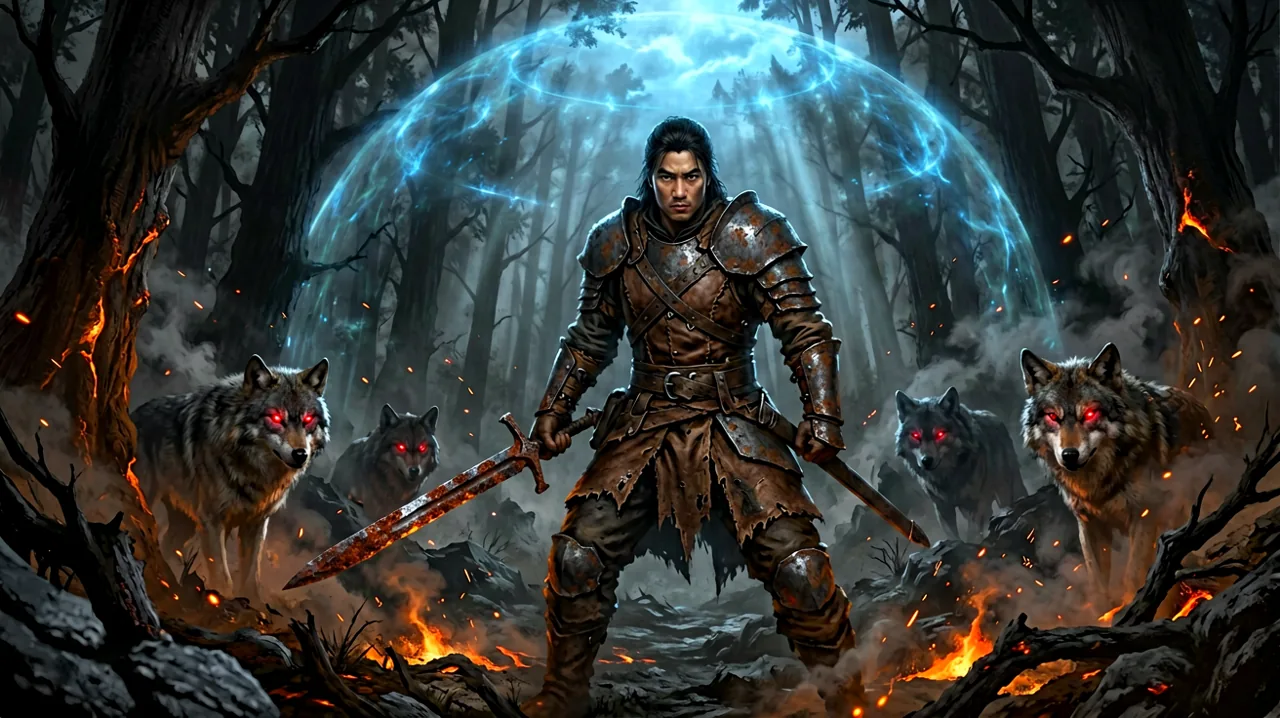
The modding community for the Gothic 1 Remake has been incredibly active since the game’s release, offering everything from quality-of-life UI tweaks to major graphical overhauls. Recently, however, a new trend has emerged on platforms like Nexus Mods and the Steam Workshop: dynamic monster respawns and random encounter generators. These mods aim to make the wild areas of the mining colony feel more alive by repopulating cleared zones and throwing surprise ambushes at the Nameless Hero while exploring.
While breathing more life into the valleys and forests of the Barrier sounds fantastic on paper, these mods are sparking a massive debate within the hardcore community. In a recent discussion on the game’s subreddit, a player noted that by using community-reported mods that gradually respawn enemies and add random encounters, they had already reached Level 7 in Chapter 1 without even touching a single quest from the Swamp Camp. Their concern was simple: by leveling up faster than intended, would they become massively overleveled and ruin the carefully crafted progression of the game?
If you are a first-time player considering these mods because the wilderness starts feeling a bit empty after your initial hunting sprees, you need to understand how the underlying systems of this classic ARPG work. Here is a deep dive into why infinite monster respawns can fundamentally break your first Gothic 1 Remake experience.
The Finite World of the Mining Colony
To understand why respawn mods are so disruptive, we first have to look at the core design philosophy inherited from the original 2001 masterpiece and faithfully recreated by Alkimia Interactive. Unlike modern open-world RPGs where forests continuously pump out bandits and beasts to keep you occupied, the colony in Gothic 1 Remake is a strictly closed ecosystem.
There is a finite, hard-coded amount of experience points (XP) available in the world at any given time. When you leave the safety of the Old Camp and slaughter a pack of Scavengers near the river, those Scavengers are dead. They do not magically return after you sleep in a bed for 24 hours. The forest remains quiet, and the path you just cleared becomes a permanently safe trade route for you to travel.
This finite design achieves three crucial things for the gameplay loop:
- A Tangible Sense of Progress: When you clear a dangerous path, you physically alter the safety of the world. You have conquered that small slice of the colony, and the game rewards you with permanent peace in that specific area.
- Forced Exploration: Because you cannot run circles around the starting area killing the same low-level Molerats for infinite XP, the game naturally pushes you to explore deeper, darker, and more dangerous territories (like the Orc lands or the dense eastern woods) to find the XP needed for your next level.
- The Underdog Power Fantasy: You start as absolute bottom-tier prey. Earning levels is an active struggle. By restricting the total XP pool, the game ensures that every single level gained feels like a monumental triumph rather than a participation trophy.
Breaking the Learning Point Economy
The most immediate casualty of a monster respawn mod is the game’s delicate Learning Points and Skills economy. Every time you level up, you receive 10 Learning Points (LP). These points are the lifeblood of your character progression. You spend them at trainers to increase your core attributes like Strength, Dexterity, and Mana, to improve weapon mastery, or to learn essential utility skills like Lockpicking and animal processing.
Because XP is finite in the vanilla game, your LP is also strictly finite. This creates tension and requires actual build planning. Do you invest your early points into Strength so you can wield a decent sword, or do you save them to learn the ways of Rune Magic once you decide to join a camp? You simply cannot have it all—at least not in the early chapters.
If you introduce a mod that allows enemies to respawn gradually, you are essentially injecting an infinite XP exploit directly into the game’s veins. The player mentioned in the community discussion who hit Level 7 early on is already sitting on 70 LP. By grinding respawning enemies, a player could theoretically max out their one-handed sword mastery and pump their strength to formidable levels before ever speaking to Gomez in the Old Camp or Lee in the New Camp.
This destroys the early-game tension. The Ore Barons’ guards and the mercenaries are intimidating precisely because they are mathematically superior to you. If you grind respawning enemies, you bridge that gap artificially. You transform a harsh, hardcore survival experience into a generic hack-and-slash where you out-stat your problems instead of outsmarting them.
The Destruction of the Ore Economy
In the Gothic 1 Remake, magical Ore is the central currency. It is used to buy everything from basic food to the Best Early Weapons and armor. One of the primary ways to earn Ore in the early game is by learning animal processing skills—like extracting teeth, removing claws, and skinning reptiles.
If monsters do not respawn, the amount of pelts and claws you can harvest is strictly limited. You have to think carefully about what you buy with your hard-earned trophies. Should you buy a new pair of digger’s trousers, or save up for a better hunting bow?
With dynamic respawn mods, wild animals become infinite ATMs. A few hours of running back and forth through the woods fighting randomly spawned wolf packs will yield enough pelts to drain the inventory of every merchant in the colony. The struggle to afford your first set of decent faction armor—a hallmark of the true Gothic experience—completely evaporates. You will walk into Chapter 2 with pockets so heavy with Ore that the game’s economic balance will never recover.
How the Game Actually Handles Respawns
A common misconception among modern RPG players is that the world of Gothic remains permanently empty once cleared. This is factually incorrect, and it is likely why some players mistakenly seek out respawn mods in the first place.
The Gothic 1 Remake handles enemy repopulation elegantly through its Chapters. When you complete major story milestones and the game transitions to the next chapter, the world state aggressively updates.
- New, often far more dangerous creatures move into areas you previously cleared.
- A forest that only had a few Scavengers in Chapter 1 might suddenly be prowled by Snappers or deadly Wargs by Chapter 3.
- Key story events will shift the locations of NPCs and monsters dramatically, constantly reshaping the threat landscape of the colony.
This system ensures that backtracking through old areas remains dangerous, but it does so in a controlled manner that aligns with the story’s rising stakes, rather than relying on an arbitrary 15-minute respawn timer.
Are There Any Good Reasons to Use These Mods?
To be fair to the mod authors, these creations are technically impressive and cater to a specific audience. If this is your third or fourth playthrough of the game, and you already know the Map and Locations, the quests, and the optimal Best Builds inside and out, adding random encounters can inject a fun layer of unpredictability.
For veteran players looking to turn the colony into a more chaotic sandbox, combining a respawn mod with extreme difficulty-enhancing mods can create a highly replayable, combat-focused experience. It gives you a reason to patrol the wilderness with your endgame gear just for the pure thrill of the fight.
The Verdict
If you are stepping under the magical Barrier for the very first time, do yourself a massive favor: play the game exactly as it was designed. The periods of quiet emptiness in the wild are not a flaw; they are a fundamental feature. They are the atmospheric reward for your hard work and survival.
If you find yourself running out of things to kill in Chapter 1, it is the game’s way of naturally telling you that it is time to progress the story. Talk to the faction leaders, complete your admission quests, choose a camp, and trigger the next chapter. The world will replenish itself with new nightmares when the time is right.
Embrace the struggle, manage your finite resources carefully, and let the static world of the Gothic 1 Remake teach you its harsh lessons. You will appreciate the journey to becoming an overpowered hero much more if you actually have to earn it the hard way.